
Insect-Pathogen Interactions

Current Courses Taught by Dr. Lazzaro
Ecological Genetics (Entom 4700 / BioEE 4800)

Ecological Genetics focuses on the application of population genetic concepts in ecological contexts, with emphases on measuring adaptation in natural populations, detecting the effects of population demography, and determining the genetic basis of quantitative traits. Illustrative examples will be drawn from the primary research literature to demonstrate experimental techniques and methods of data analysis on single-gene, multi-locus and genome-wide scales.
Learning Outcomes:
-
Students will be able to apply and test basic models of genetic evolution to real biological scenarios, guided by case examples from the primary scientific literature as well as the lecture-based presentations of abstract concepts.
-
Students will be able to apply analytical tests to empirical data sets and draw statistically robust conclusions.
-
Students will be able to interpret data and results in a broader context to reach plausible biological conclusions. Students will employ scientific thinking to solve problems that mirror real-life experimental scenarios.
Offered odd Spring semesters, next offering Spring 2027
Prerequisites: BIOEE 1780. Recommended prerequisite: introductory course in genetics and/or statistics. Permission of instructor required if prerequisites are not met.
Cornell Distribution Requirements: BSC-AG, DLG-AG, OPHLS-AG
Bugs in Bugs: Insect Pathology and Immunity (Entom 3630)

Bugs in Bugs: Insect Pathology and Immunity provides an overview of the major groups of internal pathogens and parasites that infect insects in natural and managed settings, as well as the fundamental structure of the insect immune system for combatting infection. Major pathogen groups covered include viruses, bacteria, fungi, parasitoids, nematodes and other parasites. The course will examine infection strategies used by each pathogen group and the mode of host immune defense deployed against each pathogen. At the population level, the course will examine epidemiological and evolutionary outcomes of infection.
Learning Outcomes:
-
Describe general characteristics of parasites, parasitoids, bacterial symbionts and pathogens, viruses, and fungi associated with insects and other arthropods in natural and managed settings.
-
Describe the basic functions of insect immune systems and how they compare to immune functions in vertebrates and plants.
-
Analyze illustrative examples of insect pathogenesis and evaluate consequences at the individual and population levels.
-
Describe current scientific literature and apply it to novel cases, both individually and in discussion with peers.
Offered odd Fall semesters, next offering Fall 2027
Prerequisites: BIOMG 1350 or BIOG 1440 or BIOG 1445 or permission of instructor.
Cornell Distribution Requirements: BSC-AG
High School Research Mentor (Lumiere Education)

As a Research Mentor through Lumiere Education, Dr. Lazzaro works individually with remote high school students to guide them through an independent research project. Students may located anywhere in the world. Research projects may be literature based or may involve data analysis. The Lumiere Program is 12-14 weeks long and may result in work published in an appropriate high school journal. The program requires extensive independent work by the student and includes 1-2 meetings per week with the Mentor. Apply through Lumiere Education.
Previous Teaching Experience
Introduction to Evolution and Diversity (BioEE 1780)

Introduction to Evolution and Diversity is part of the Introductory Biology core curriculum at Cornell. This course introduces evolutionary explanations for pattern of diversity and the apparent good fit of organisms to the environment. Content includes the diversity of life, the genetics and developmental basis of evolutionary change, evolutionary processes at the population level, evolution by natural selection, modes of speciation, long-term trends in evolution, and the origin of humans.
Tropical Field Ecology and Behavior (BioEE 2650)
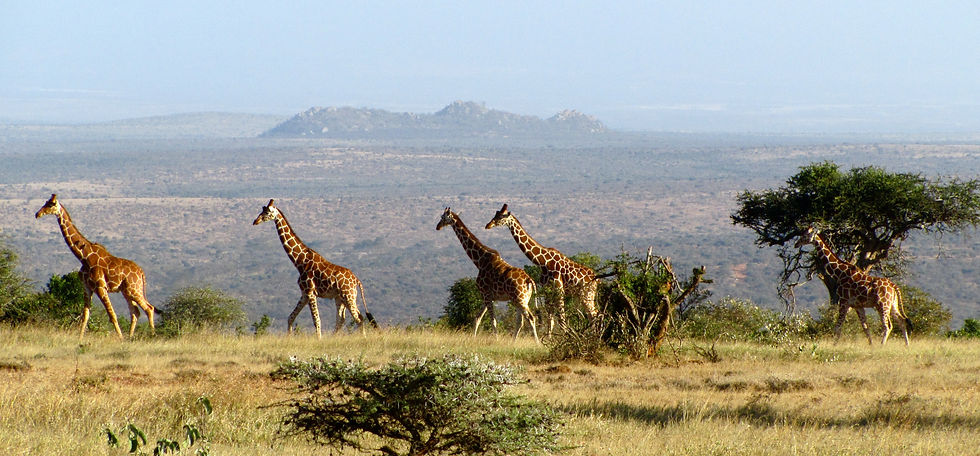
Tropical Field Biology and Behavior was a field course based at the Mpala Research Station near Nanyuki, Kenya, during January intersession. The 3-week course guided students through devising and executing field ecology research projects, conducting appropriate statistical analysis, and writing results in publication format. Students delved into primary scientific literature describing organisms at the field site and learned the natural history of the plants and animals on the site.
Population Genetics (BioMG 4810)

Population Genetics is the study of the transmission of genetic variation through time and space. This course explores how to quantify this variation, what the distribution of variation tells us about the structure of natural populations, and about the processes that lead to evolution. Topics include the diversity and measurement of genetic variation, mating and reproductive systems, selection and fitness, genetic drift, migration and population structure, mutation, multilocus models, the genetics of speciation, quantitative traits, and the maintenance of molecular variation. Emphasis is placed on DNA sequence variation and the interplay between theory and the data from experiments and natural populations. Specific case studies include the population genetic issues involved in DNA fingerprinting, the genetic structure and evolution of human populations, and the study of adaptation at the molecular level. Examples are drawn from studies of animals, plants, and microbes.
Seminar in the Ecology and Evolution of Infection and Disease (BioEE 6900)

EEID Journal Club is a Graduate level discussion of the ecology, epidemiology, genetics and evolution of infectious disease in animal and plant systems. Weekly discussion of research papers published in the primary scientific literature. Participation in discussion and presentation of at least one paper required for course credit.
Academic Placement Program, faculty job applications (CIHMID APP)

The CHIMID APP Program is an intensive summer workshop for postdoctoral researchers who are actively preparing faculty job applications. The APP will focus on the 5 common components of an academic job application: Research Statement; Teaching Statement; Diversity, Equity and Inclusion Statement; CV; and Cover Letter. Each component will be tackled separately over a period of weeks. For each component, there will be a faculty panel discussion on key elements for the document, followed by group writing sessions and writing deadlines for first and second drafts. Each draft will receive constructive feedback given by two peers in the program and the workshop instructor. By adhering to the timeline, all APP participants should have a fully developed academic job application by September.
AP Biology Exam Development Committee (College Board)

The AP Biology Exam Development Committee is an 8-person committee that is responsible for writing the multiple-choice and free-response questions that make up the annual AP Biology exam administered by the College Board. The Exam Development Committee is composed of high school teachers and college professors, and is contracted by the College Board. Dr. Lazzaro was a member of this committee 2015-2018 and was co-chair of the committee 2016-2018.